
Review: Chicago Farmer- 'Homeaid'
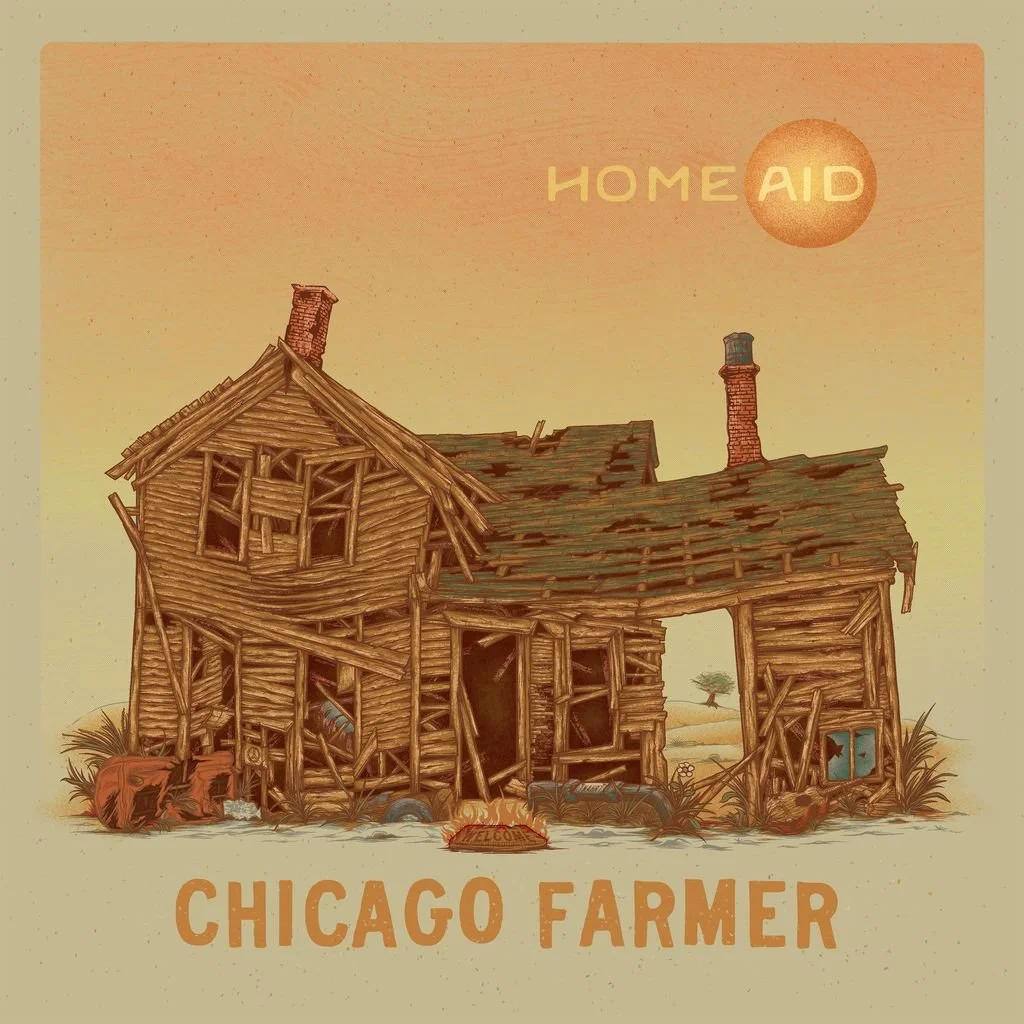
I first saw Chicago Farmer, the moniker for Cody Diekhoff, opening up for Todd Snider. I came away impressed, not in small part because of Snider's endorsement of his music later in the show, where he joked that he and Chicago Farmer made “Americana music,” which used to just be called “unsuccessful country.” But success is in the eye of the beholder, and on his new album Homeaid, Chicago finds a lot of success in experimenting with his signature sound.
For his fourth album, Chicago Farmer moved away from the Arlo Guthrie/Todd Snider-esque folk of his previous three and into a fuller band sound. Working with Hard Working Americans' Chad Staehly as producer, Chicago Farmer also brought his touring band, The Fieldnotes, into the studio with him. The easy camaraderie of the band brought about a musical tightness that might not have existed otherwise.
One of the album's standout tracks, and the best indicator of a more rocking tone, is its first single, “Peshtigo.” Telling the story of a horrifying Wisconsin fire that didn't get much news coverage due to happening at the same time as the Great Chicago Fire of 1871, it features a driving bassline that anchors Jaik Willis wailing guitars, as well as a surprisingly strident set of pipes from Diekhoff.
Album opener “Tina Hart's Mustang” is also a highlight. An ode to unbridled teenage excesses, it tells the story of a girl whose car is the fastest drag racer in her town. Or is it? When a rival racer buys the car, he finds it lacking in power, prompting Diekhoff to muse, “It wasn't Tina Hart's Mustang, it was always Tina Hart.”
“Sorry You're Sick” is a track about aging, and about caring for your loved ones, even if that caring isn't always the most productive. Addressing his unwell companion, Diekhoff helpfully asks, “What do you want from the liquor store? / Something sour? Something sweet?/ I'll buy you all your belly can hold / You can be sure you won't suffer no more.”
“The Twenty Dollar Bill” is the closest Homeaid has to Chicago Farmer's familiar folkie storyteller persona from his previous three albums. In it, Diekhoff celebrates his grandparents' unconditional love and the caring for others he saw in their lives. A simple emergency twenty from his grandmother is the vehicle Diekhoff uses to illustrate his grandmother's caring. “I'll keep you in my heart / and your twenty in my shoe,” Diekhoff sings before the song takes a darker turn with an attempted robbery foiled by a gift of “grandpa's knife.”
While it's a more rocking turn from Chicago Farmer, I don't think fans of his more folksy output will be unhappy with Homeaid. The intricately woven stories and fully developed characters that made people like Todd Snider (and, somewhat less impressively, myself) fans remain intact. I keep a running list of favorite Americana albums to help me sort the pile for my mid- and end-year lists and, while it's early in the year, Chicago Farmer is very much on the list of my favorites so far..